There are moments when people don't just test our boundaries—they explain why they believe they should be allowed to cross them.
Last week reminded me that sometimes the hardest part of protecting your peace isn't saying "no." It's hearing someone tell you why your "no" doesn’t matter. As I sat reflecting on the week, those two thoughts kept replaying in my mind. Boundaries are often misunderstood. They're seen as rejection, punishment, or even disrespect, but healthy boundaries aren't about pushing people away. They're about protecting the space where healing can continue.
Last week, someone close to me believed their role in my life entitled them to more access than I was willing to give. Their reasoning wasn't rooted in malice—it was rooted in belief. A belief that because of who they were, my boundaries should somehow become flexible. That conversation made me pause, not because I questioned my boundary, but because I realized how often people try to explain why our boundaries shouldn't apply to them.
Maybe you've experienced it too. "But I'm your mother." "But we're family." "I've always been there for you." "I just can’t turn it off..." Sometimes the title changes, but the message stays the same: "What I want should matter more than the boundary you've set."
For a long time, I probably would have felt the need to defend myself, to explain, to justify, to make sure the other person understood my heart, but healing has taught me something different. Not every boundary requires a debate, not every "no" requires an explanation, and not everyone has to agree with your boundary for it to be healthy.
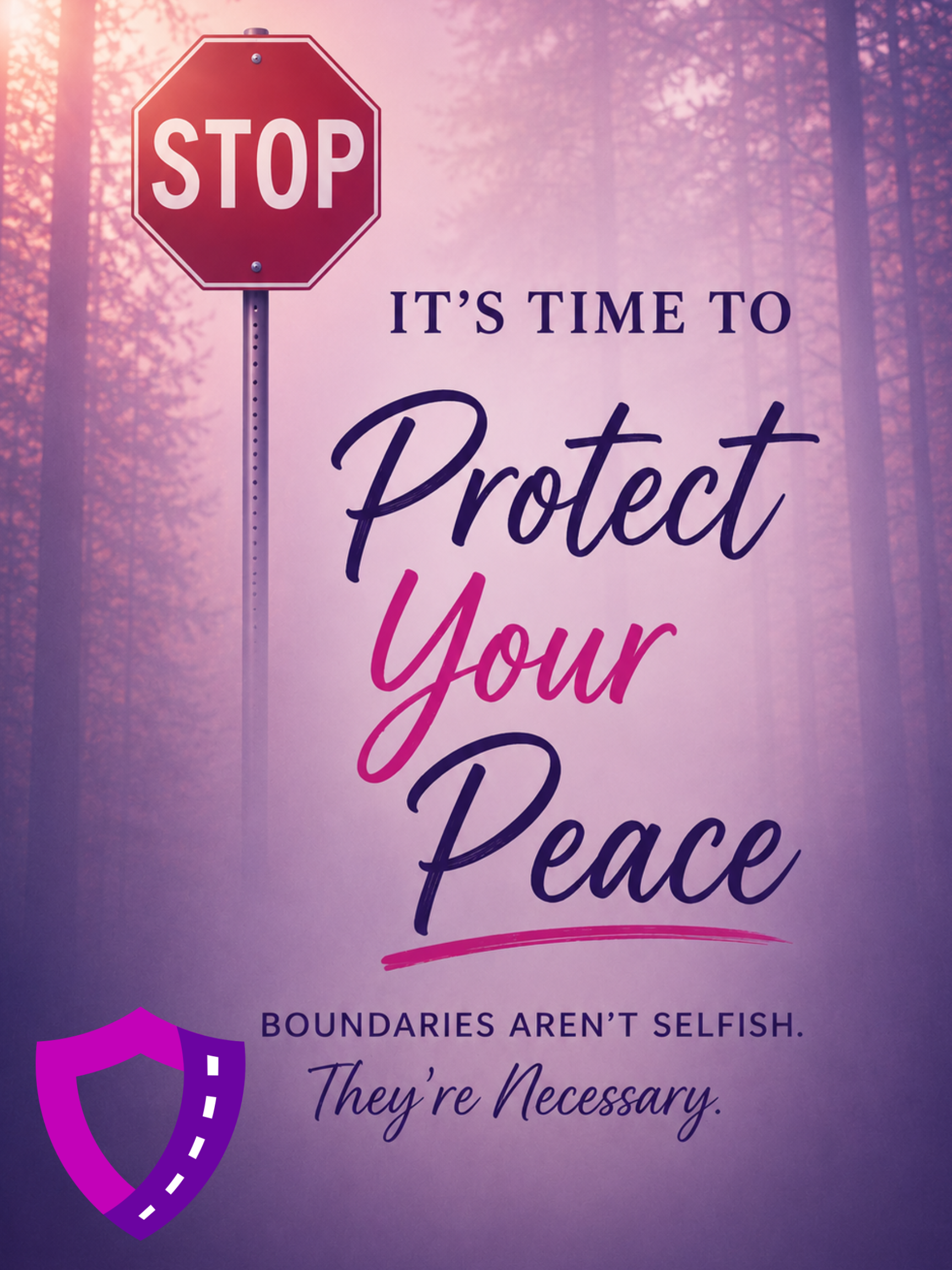
The stop sign came to mind because it doesn't apologize for asking drivers to stop. It doesn't negotiate, it doesn't make exceptions because someone is in a hurry. It simply stands there, doing exactly what it was designed to do—protect people from unnecessary harm. Healthy boundaries do the same. They're not walls built out of anger, they're guardrails built with wisdom.
The more I reflected, the more I realized that protecting my peace doesn't mean I love someone less. It means I've learned that love and boundaries can exist together. One doesn't cancel out the other. In fact, healthy relationships often depend on both. If this past week reminded me of anything, it's that healing sometimes requires us to stop—not because we've stopped loving people, but because we've stopped believing that protecting ourselves is wrong.
Sometimes "stop" isn't harsh, it's holy, it's healing, and sometimes... It's exactly what allows us to keep moving forward.